
15Apr

How to Hire AI, Machine Learning, and Computer Vision Engineers in a Competitive Market

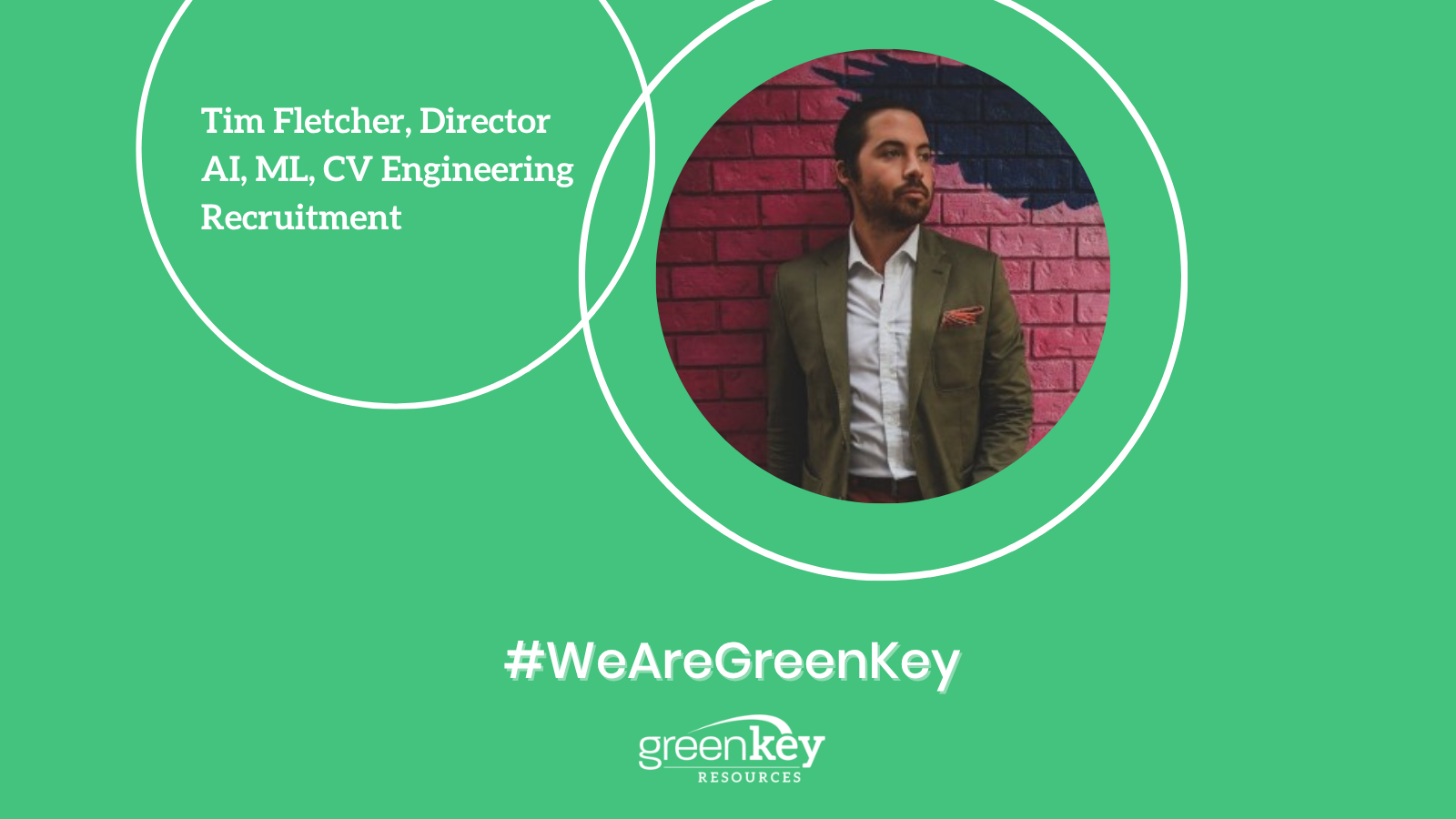
Meet Tim Fletcher, Green Key’s AI and Advanced Engineering Recruiting Lead

Artificial intelligence is no longer experimental. It now sits at the core of how companies build products, scale technology, and make critical decisions. As demand accelerates for AI, Machine Learning, and Computer Vision engineers, hiring in this space requires far more than traditional IT recruiting experience. It demands technical fluency, speed, and a clear understanding of how these roles drive real-world outcomes. 

To meet this need, Green Key Resources continues to expand its IT and advanced engineering recruiting practice, led by Tim Fletcher. Tim specializes in placing highly technical AI, ML, and Computer Vision talent with high-growth, venture-backed companies building complex, production-grade systems. 

“Welcoming Tim to Green Key is a strategic investment aligned with where our clients are headed,” said Matt Schirano, Partner at Green Key Resources. “As demand for AI, Machine Learning, and Computer Vision talent continues to accelerate, Tim brings the technical depth and market insight needed to build this vertical thoughtfully and effectively. Equally important, he is fully integrated with our team of more than 20 technical recruiters, ensuring clients benefit from both specialized expertise and the scale of an established organization. Tim’s leadership strengthens our ability to support complex, highgrowth teams while continuing to deliver the collaborative, hightouch experience Green Key is known for.” 

From IT Recruiting to Advanced AI Engineering 

Tim’s recruiting background spans the full IT lifecycle, from early-career technical roles to executive-level technology leadership. Today, his focus is squarely on advanced engineering positions that directly influence autonomy, perception, and intelligent decision-making. 

“Traditional IT roles center on infrastructure and security,” Tim explains. “AI, ML, and Computer Vision engineers are evaluated on their ability to design and deploy data-driven systems that operate in the real world.” 

That distinction shapes every part of the hiring process. AI and ML recruiting requires deeper technical evaluation, clearer role scoping, and an understanding of how engineers function within product-led or research-intensive environments. 

Why AI and ML Hiring Remains Highly Competitive 

While parts of the broader tech market have cooled, demand for applied AI, ML, and Computer Vision talent continues to outpace supply. Companies are competing for a relatively small group of engineers who have experience deploying models into production, not just experimenting in theory. 

“Compensation matters, but it is rarely the deciding factor,” Tim notes. “Top candidates prioritize leadership quality, technical vision, and whether their work will have a tangible impact.” 

Because of this, strong candidates often manage multiple offers simultaneously, making speed and clarity critical throughout the hiring process. 

What Sets Top AI Engineers Apart 

Tim primarily partners with Tier‑1, VC-backed startups from Seed through Series D, helping them build and scale engineering teams. His evaluation process goes far beyond resumes or keyword matching. 

“I focus on context,” he says. “Company stage, team size, and what the engineer truly owned or influenced. That is where real impact shows up.” 

Across searches, the strongest candidates consistently demonstrate a solid academic foundation, relevant hands-on experience, and the ability to operate effectively in fast-moving, ambiguous environments. 

Speed and Alignment Matter 

In advanced engineering recruiting, delays are costly. 

“Strong candidates do not stay available for long,” Tim explains. “Interview processes that drag on for weeks significantly reduce the chance of closing top talent.” 

The most successful hiring teams stay aligned internally, remain engaged throughout the process, and treat AI hiring as a strategic priority rather than a reactive need. 

The Value of Technical Recruiting Expertise 

Founders and engineering leaders frequently encounter recruiters who lack technical fluency. In AI, data, and robotics searches, that gap can derail progress quickly. 

“Understanding the technology is non-negotiable,” Tim says. “Clients expect a partner who can accurately assess experience, speak credibly with candidates, and represent the role honestly.” 

Tim brings hands-on recruiting experience across AI, Machine Learning, Computer Vision, Embedded Systems, Firmware, Electrical Engineering, and Full Stack development, supporting both software-first platforms and hardware-enabled products.  

How AI Teams Are Evolving 

AI teams are moving faster than ever, deploying models more quickly and integrating AI-assisted development tools into daily workflows. Even so, fundamentals still differentiate the strongest engineers. 

“Engineers who understand why they are building something always stand out,” Tim says. “That foundation allows teams to use AI tools effectively instead of relying on them without context.” 

For companies building AI teams for the first time, clarity of mission, aligned leadership, and a compelling external narrative remain essential to attracting top-tier talent. 

Expanding Green Key’s AI and Advanced Engineering Practice 

Tim continues to lead Green Key’s growth in AI, Machine Learning, and Computer Vision recruiting, partnering with an expanding network of venture-backed clients nationwide.  

Whether you are hiring advanced AI talent or considering your next move as an engineer, Green Key Resources combines deep market knowledge with a people-first approach to every search. Connect with Tim Fletcher at tfletcher@greenkeyllc.com or visit www.greenkeyllc.com to learn more. 

Sep 13, 2024

The Disadvantages of AI-Generated CVs

In today’s digital age, artificial intelligence (AI) has revolutionized many aspects of our lives, including the job application process. AI-generated CVs are becoming increasingly popular due to their convenience and efficiency. However, there are several disadvantages to relying solely on AI for creating your CV.

According to Futurism.com, “Without proper editing, the language will be clunky and generic, and hiring managers can detect this,” Victoria McLean, CEO of career consultancy company CityCV, told FT. “CVs need to show the candidate’s personality, their passions, their story, and that is something AI simply can’t do.”

Here are some key points to consider:

Lack of Personalization

AI-generated CVs often lack the personal touch that can make a candidate stand out. These CVs tend to follow a generic template, which may not effectively highlight an individual’s unique skills, experiences, and personality. Employers appreciate CVs that reflect the candidate’s personal brand and creativity, something AI might struggle to capture.

Inaccuracies and Errors

While AI can process large amounts of data quickly, it is not infallible. AI-generated CVs can sometimes contain inaccuracies or errors, such as incorrect job titles, dates, or even mismatched skills. These mistakes can be detrimental to a candidate’s chances, as they may be perceived as careless or unprofessional.

Overemphasis on Keywords

AI systems often prioritize keywords to match CVs with job descriptions. This can lead to an overemphasis on including specific terms, sometimes at the expense of a coherent and compelling narrative. Candidates might feel pressured to “game the system” by stuffing their CVs with keywords, which can result in a document that feels forced and unnatural.

Limited Customization

AI-generated CVs may not offer the flexibility needed to tailor applications for different job roles. Customizing a CV for each job application is crucial to demonstrate how one’s skills and experiences align with the specific requirements of the position. AI tools might not provide the level of customization needed to make a strong impression on potential employers.

Potential Bias

AI algorithms are only as unbiased as the data they are trained on. If the training data contains biases, these can be reflected in the AI-generated CVs. This can inadvertently perpetuate existing biases in hiring practices, potentially disadvantaging certain groups of candidates.

Lack of Human Insight

Human recruiters often look for qualities that go beyond what is written on a CV, such as cultural fit, enthusiasm, and potential for growth. AI-generated CVs may not effectively convey these intangible qualities, which can be crucial in the hiring decision-making process.

While AI-generated CVs offer convenience and speed, they come with several disadvantages that can impact a candidate’s job prospects. It’s important to strike a balance between leveraging AI tools and maintaining a personal touch in your CV. By being aware of these potential pitfalls, job seekers can make more informed decisions about how to present themselves to potential employers.

At Green Key, we provide personalized guidance to help you craft a standout resume, prepare for interviews, and navigate your job search with confidence. Ready to take the next step in your career? Contact one of our expert recruiters today to get started on a tailored approach to your job hunt!

Anthropic Unveils Claude 3: Redefining AI Chatbots with Enhanced Capabilities

Anthropic, the AI startup backed by Google and with substantial venture capital, has just introduced the latest iteration of its GenAI technology: Claude 3. This announcement marks a significant advancement in AI capabilities, positioning Claude 3 as a formidable competitor even against OpenAI’s GPT-4.

Advanced Capabilities

According TechCrunch, “Claude 3, as Anthropic’s new GenAI is called, is a family of models — Claude 3 Haiku, Claude 3 Sonnet, and Claude 3 Opus, Opus being the most powerful. All show “increased capabilities” in analysis and forecasting, Anthropic claims, as well as enhanced performance on specific benchmarks versus models like ChatGPT and GPT-4 (but not GPT-4 Turbo) and Google’s Gemini 1.0 Ultra (but not Gemini 1.5 Pro).”

Multimodal Functionality

One notable feature of Claude 3 is its multimodal functionality, enabling it to analyze both text and images. This capability, like some iterations of GPT-4 and Gemini, allows Claude 3 to process various visual data such as, “…photos, charts, graphs and technical diagrams, drawing from PDFs, slideshows and other document types.” TechCrunch went further to note, “In a step one better than some GenAI rivals, Claude 3 can analyze multiple images in a single request (up to a maximum of 20). This allows it to compare and contrast images, notes Anthropic.” However, Anthropic has imposed limits on image processing to address ethical concerns, “Anthropic has disabled the models from identifying people…”

Claude 3’s Limitations

While Claude 3 showcases remarkable advancements, it’s not without limitations. TechCrunch reported that, “…the company admits that Claude 3 is prone to making mistakes with “low-quality” images (under 200 pixels) and struggles with tasks involving spatial reasoning (e.g. reading an analog clock face) and object counting (Claude 3 can’t give exact counts of objects in images).” Anthropic promises frequent updates to Claude 3, aiming to enhance its capabilities and address existing limitations. These updates will include improvements in following multi-step instructions, structured output generation, and multilingual support, making Claude 3 more responsive and adaptable to user needs.

As Anthropic continues to innovate and expand their offerings, the company remains dedicated to fostering a transparent and responsible approach to AI development. With substantial backing and a clear roadmap for future enhancements, Anthropic is poised to share the future of AI-driven solutions and pave the way for transformative advancements in various domains.

If you’re looking to take your career to the next level be sure to check out our IT page.